
Grief at work
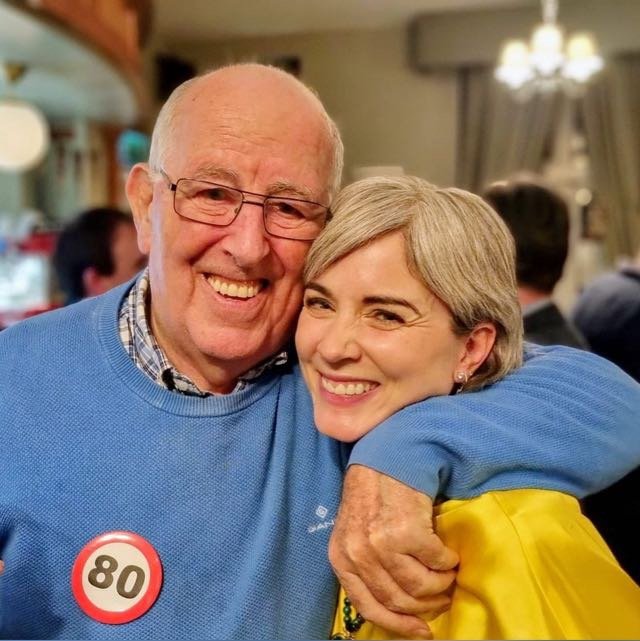
My Dad died unexpectedly a few weeks ago. My second parent. I grieved my mum in my early 20s, and now 22 years later my Dad. I’ve worked with clients and workplaces over the years, supporting the personal nature of grief, and supporting the systems which facilitate employees in their grief. This renewal of my grief has gotten me further thinking.
Grief doesn't clock out.
It doesn't wait until you've cleared your inbox, finished the school run, or made it through the quarterly review. It shows up on a Tuesday morning in the middle of a team meeting, or on the commute home when a song comes on the radio. And for so many people, it walks into work with them every single day — quietly, invisibly, and often completely alone.
We talk a lot about wellbeing at work. We have policies, EAP programmes, mental health champions. But grief? Grief is still the elephant in the room in most workplaces. We don't quite know what to say, so a lot of the time, we say nothing at all.
I want to change that.
What grief actually does to a person
Before we talk about what workplaces can do, it helps to understand what grief is really doing on the inside — because it's a lot more than sadness. Grief is a full-body, full-brain experience. When we lose someone (or something — a relationship, an identity, a way of life), the brain's threat response activates in a way that's not unlike trauma. The prefrontal cortex — the part responsible for concentration, decision-making and planning — becomes less accessible. Memory becomes patchy. Time feels distorted. Energy that used to go towards everyday functioning is now being quietly consumed by the work of loss.
I remember having to write every single thing down when my Mum died. I couldn’t remember doing work that I had done well. I couldn’t remember what I was supposed to be doing next. I felt like I was going mad.
Do you have a colleague who is in grief? This person sitting across from you in a meeting who "seems fine" might be running on a fraction of their usual cognitive capacity. They might be forgetting things, missing deadlines they'd never usually miss, or struggling to make even simple decisions. This isn't a performance problem. This is grief, doing what grief does.
And here's the thing about grief that most people don't talk about: it isn't linear. The old "five stages" model — denial, anger, bargaining, depression, acceptance — is now largely considered an oversimplification. Grief doesn't move in a tidy sequence. It spirals. People can feel fine for weeks and then be floored by a wave they didn't see coming. That can be confusing and even frightening for the person experiencing it, let alone for the colleagues and managers around them.
We need to acknowledge and talk about it.
The silence is doing damage
When grief is met with silence — with avoidance, or a well-meaning but awkward "let me know if you need anything" followed by nothing — the person grieving receives a message, even if no one intends to send it: this isn't something we talk about here.
That silence has a cost. It can push people to mask their grief, to perform a version of "okay" that they don't feel, to use up precious energy pretending. Over time, that takes a real toll — on wellbeing, on engagement, and yes, on the organisation too.
I've worked with people who came back from bereavement leave feeling completely invisible, as if the loss hadn't happened, as if they were expected to pick up right where they left off. Some of them never really settled back in. A few left eventually. Not because the work wasn't right, but because the silence felt unbearable.
I remember that feeling. Like my grief should have a sell-by-date. It didn’t then, and it doesn’t now.
What workplaces can actually do
None of this requires a psychology degree. It requires some courage, some compassion, and a willingness to sit with discomfort.
Start with acknowledgement. The most powerful thing a manager or colleague can do is simply name what has happened. "I'm so sorry about your mum. That's an enormous loss." You don't need the right words — there aren't any. You just need to show up and say I see you, and I see that something significant has happened.
Ask rather than assume. Different people need different things. Some people find that work gives them structure and purpose and they want to stay close to it. Others need space and time. Rather than deciding what someone needs, ask. "What would be most helpful right now?" is a question worth asking, and worth revisiting over time — because what someone needs in week one might be very different from what they need in month three.
Give managers permission and preparation. Most managers genuinely want to help, but they're afraid of saying the wrong thing, of making it worse, of opening a door they don't know how to close. Training and guidance matter here. A brief conversation about how to approach a bereaved colleague can make all the difference.
Revisit your bereavement policy. Statutory bereavement leave in Ireland remains limited. Many organisations offer a few days for close family members — but grief doesn't resolve in a few days, and the loss of a close friend, a pregnancy, a pet, or a relationship can be just as devastating as the loss of a parent or sibling, yet often receives no formal recognition at all. Review your policy through a human lens, not just a procedural one.
Create a culture where it's okay to not be okay. This is the longer game — but it's the most important one. Organisations that genuinely support people through grief are ones where psychological safety exists in the everyday, not just in a crisis. Where a team leader can say "this has been a hard week" and mean it. Where people aren't expected to leave their humanity at the door.
A note on the long tail of grief
Grief research consistently shows that the hardest period can actually come a few months after a loss — when the initial support falls away, people assume you're "over it," and the reality of permanent absence truly settles in. The anniversary of a death. The first Christmas. The birthday that passes without a call.
If someone on your team is bereaved, make a note. Check in three months later, not just in the immediate aftermath. A simple "I was thinking of you this week" can mean everything.
The bottom line
Workplaces that handle grief well don't necessarily have more resources. They have more humanity. They've made a decision — consciously or otherwise — that people matter more than performance in the moments that count most.
We spend a huge portion of our lives at work. The people around us become part of our daily fabric. When someone is hurting, we have a choice: to look away and hope it resolves itself, or to lean in with whatever imperfect, honest support we have to offer.
Lean in. Every time. Your people are your most important resource. Show them.